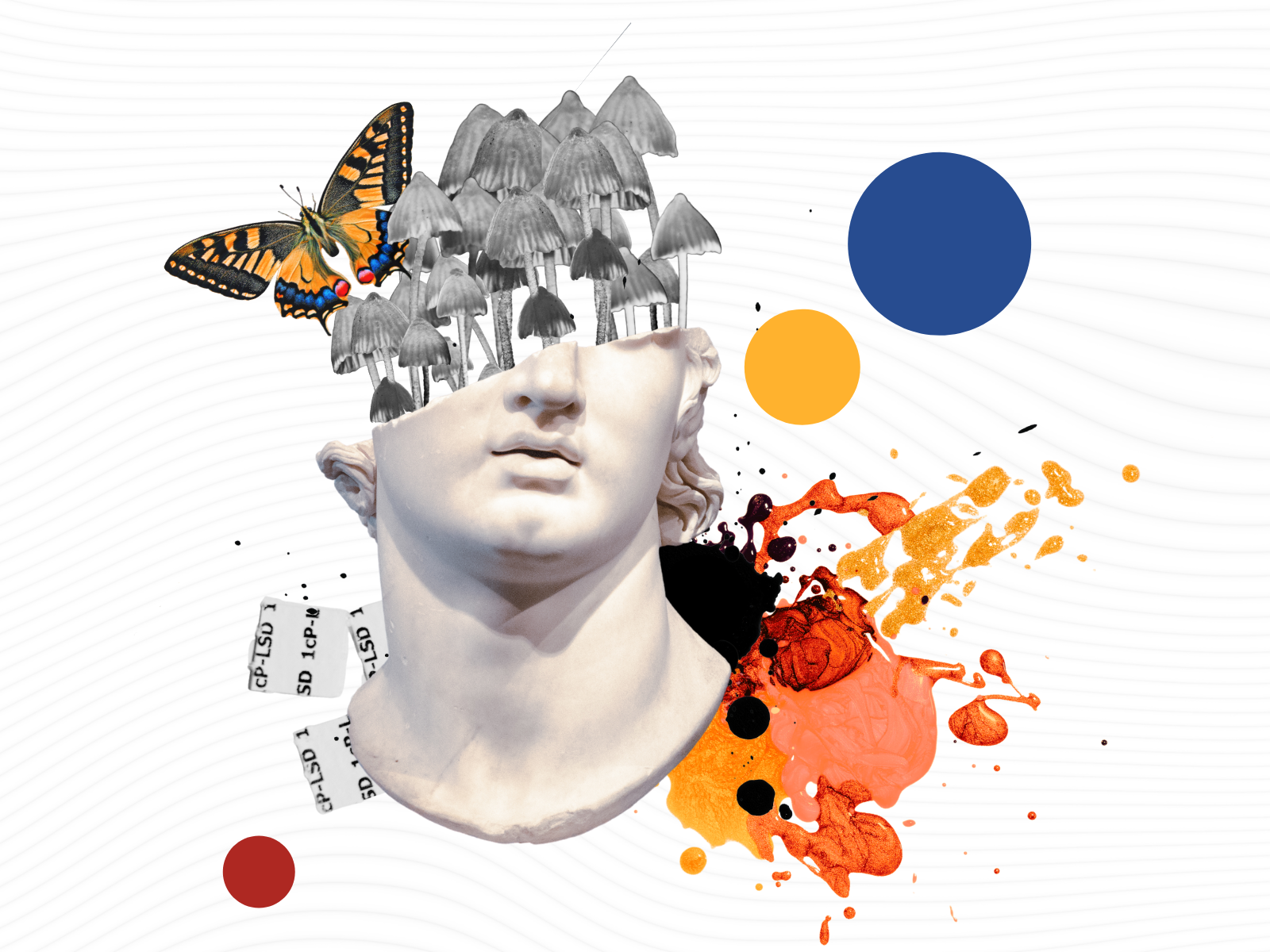

Why do some ideas land with a powerful sense of this is right—even when they turn out not to be? And can psychedelics help us understand the mechanics behind those moments of clarity?
In a recent interview with Tricycle Day, cognitive neuroscientist and co-investigator of the MINDS-supported Mind FLUX study at UT Austin, Dr. Manoj Doss, offers one of the clearest explanations to date for how psychedelics may influence insight, creativity, and the feeling of truth.
At the core of his research is a concept called processing fluency:
the ease with which your brain processes information.
When information flows smoothly through memory and semantic networks, the brain tags it as more familiar, meaningful, and correct—regardless of whether it actually is. This is the source of both genuine breakthroughs and false epiphanies.
Why Psychedelic Insights Feel So Real
In the interview, Doss explains that psychedelics may temporarily change how the brain handles memory and association. Under psilocybin or LSD, people often experience:
- Looser and wider associative connections
- Greater autobiographical and emotional salience
- A sensation of “rightness” or familiarity attached to new ideas
These shifts can create the conditions for powerful insights. But they can also inflate the confidence we feel about those insights. As Doss puts it, part of psychedelic science must involve “not just when people are having insights, but when they’re having bad ones.”
This is exactly the nuance MINDS aims to bring into the field.
Creativity, Cognition, and the Mind FLUX Hypothesis
The MINDS-funded Mind FLUX study—which Doss is co-leading at the Charmaine & Gordon McGill Center for Psychedelic Research & Therapy at UT Austin—builds directly on his processing fluency model.
The project investigates whether psilocybin can:
- Increase associative thinking
- Shift how people encode and retrieve memories
- Change the balance between generative (“Aha!”) and evaluative (“Does this really work?”) thinking
- Improve real-world creative problem-solving
The broader question is not whether psychedelics simply “make you more creative,” but whether they change the cognitive dynamics through which insights arise.
A More Mature Conversation About Psychedelic Creativity
Doss’ interview helps push the dialogue past hype. Instead of assuming that any strong idea on psychedelics is a breakthrough, his work asks:
- What cognitive mechanisms make insights feel valid?
- How do we distinguish true breakthroughs from seductive illusions?
- How can we design scientific tools that capture the richness of real-world insight?
These questions sit at the heart of MINDS’ mission:
to validate and advance the tools and practices that catalyze genuine breakthrough thinking.
As creativity researchers and psychedelic scientists converge, Doss’ work offers a framework for understanding not only how psychedelics may support innovative thinking—but also how they might mislead us. A responsible future for the field depends on both.
Read the full interview
👉 “Psychedelics Are Not Magic Creativity Pills” — Tricycle Day